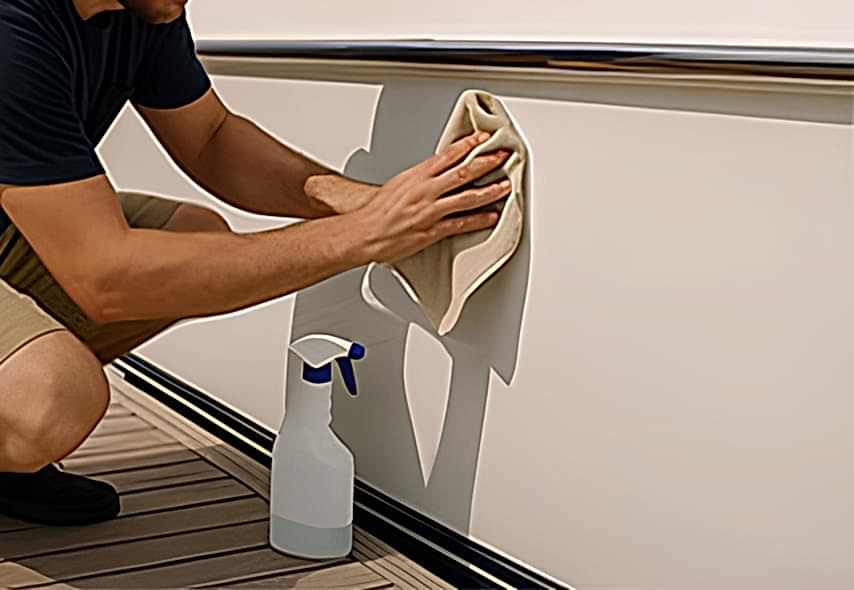
🔹 1. Surface Cleaning
The Kevlar surface is cleaned with a soft cloth, removing salt, dirt and chemicals.
Non-abrasive cleaners are used.
🔹 2. Light Scratch and Damage Inspection
The surface is checked for scratches, fiber breaks or holes.
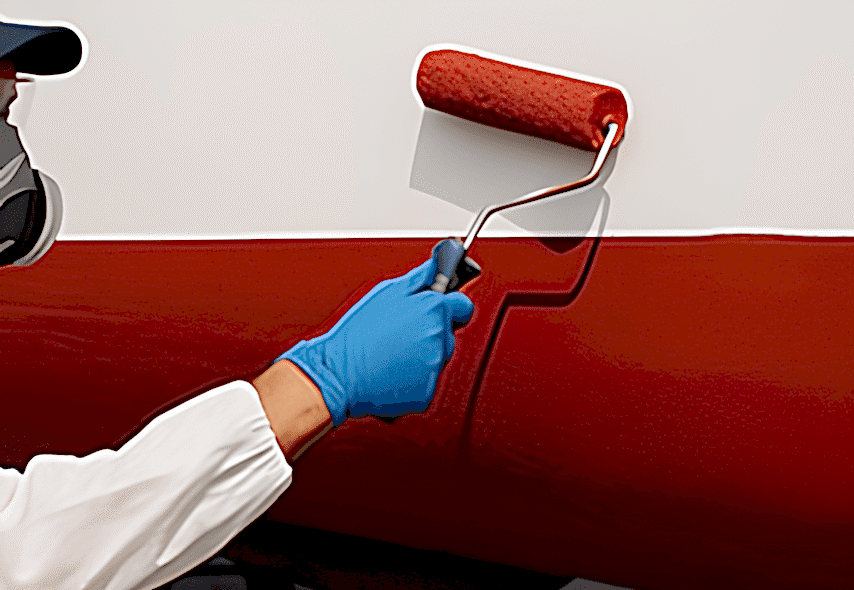
🔹 3. Protective Coating Application (Optional)
The material is protected by applying special UV and water resistant Kevlar varnish or protective resin.
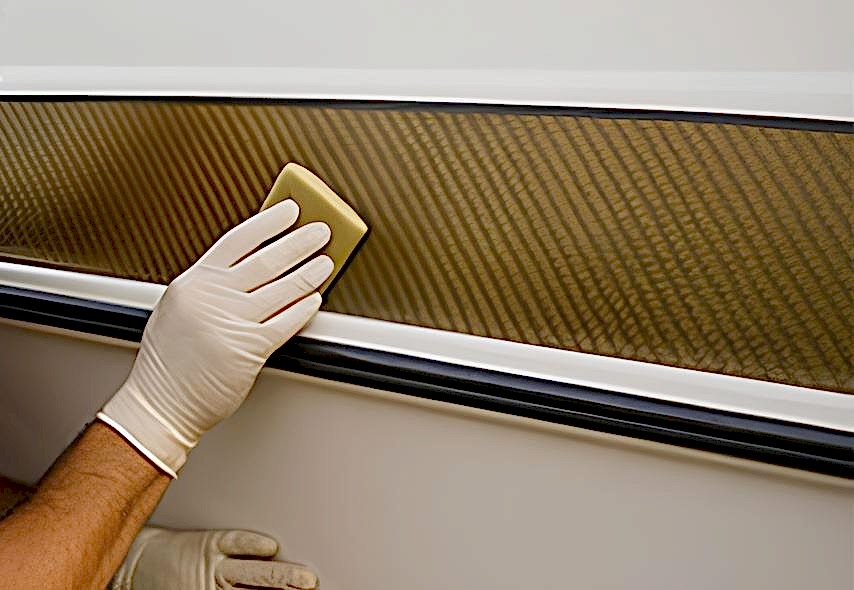
Kevlar is a high-strength, lightweight and impact-resistant material, a composite structure often used in marine, automotive, aerospace and military equipment. It is preferred in some special applications because it is more flexible and impact resistant than carbon fiber and fiberglass.
✅ Maintains the Strength of the Material
It strengthens Kevlar surfaces that wear out over time and extends their life.
✅ Increases Impact Resistance
Repairing small cracks or damage allows the Kevlar surface to remain more resistant to impact.
✅ Increases UV and Chemical Resistance
Sun rays and chemicals can weaken Kevlar fibers, preventive maintenance treatments reduce this risk.
✅ Protection against salt water and corrosion
Kevlar surfaces used in watercraft are protected against the corrosive effects of salt water.
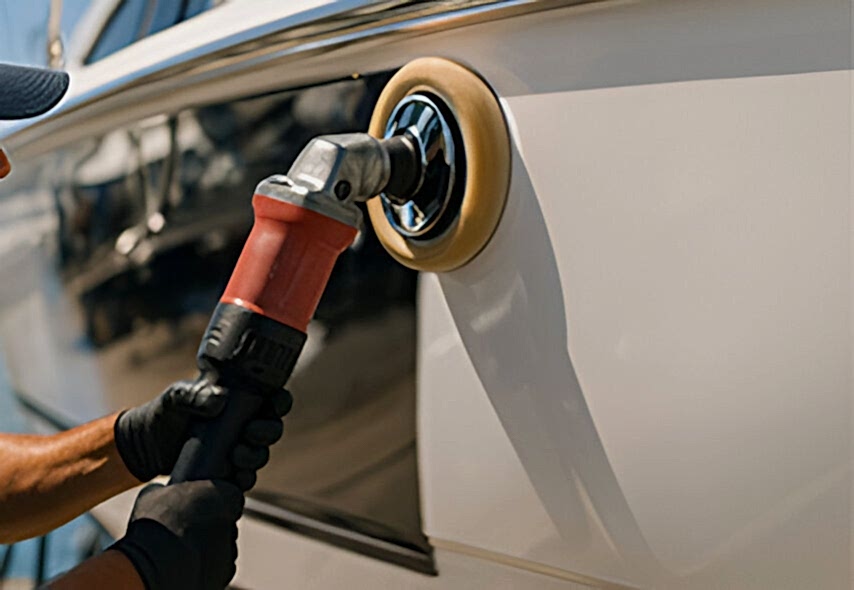
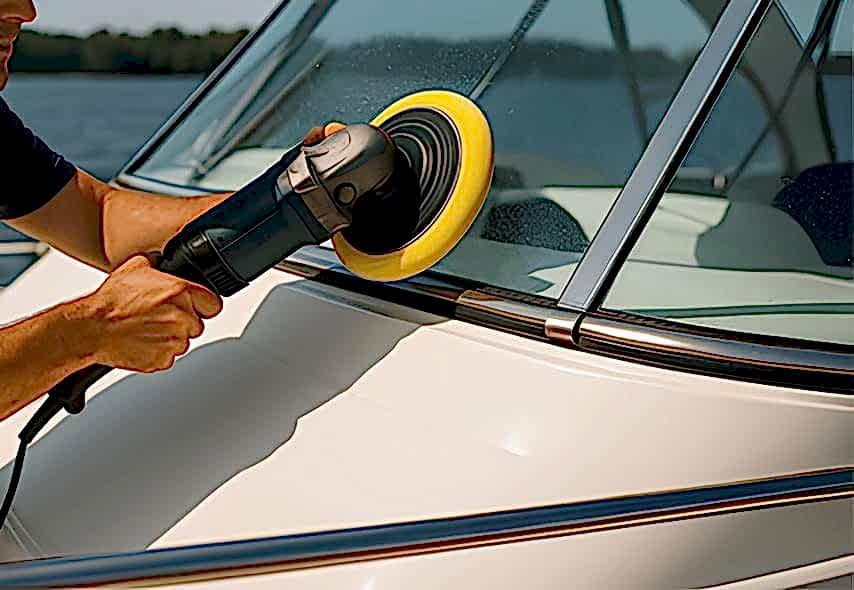
✅ Original Aesthetics and Surface Smoothness
After the repair process, the surface looks smoother and like new.